Stavros D. Kiotsekoglou
Abstract. Two Cave-Sanctuaries dedicated to the Great Mother Goddess (Kyveli), flank a solar observatory and a Sanctuary of the Sun that is worshiped together with the Great Mother Goddess, on the eastern slope of the Kasambalu Burun rocky hill of the Klisetjik Petrota site. In this location we found thrones, balanced rocks, rock-cut graves, cairn graves, stone mushrooms, serpentine rock formations, labrys (ax), repeated carved eye sockets. The carved eye sockets sanctify the rock by embodying the Great Mother Goddess in her eternal home, like the carved mask on the sky-long rocks of Karmi Kaya or a Rock Destined to protect the ancient settlement of Petrota. Through their practices, people inscribe their world view on the landscape, as well as their history, their views on social organization, religious behavior and burial practices. Like scenography in theatrical productions, the landscape is an integral part of the ceremony and helps to clarify its meaning. Religious or funerary rites can be seen as a “stage”, an almost theatrical representation of feelings of worship towards the deity or mourning for the deceased and his dependence on the deity.
The article is dedicated to Professor V. Markov and his research team.
- Introduction
1.1. Research methodology
The present study resulted from my desire to investigate the human presence and the social organization of the space of the Klisetjik (-small church) area of Petrota through the human manipulation of the landscape in order to provide the appropriate meaning. Each man-made landscape contains many notions and messages and can be read like a book, because it is the autobiography of our culture. Each individual or social group inscribes on the landscape their own perception and sense of things. Through their practices, people inscribe on the landscape perceptions linked to their worldview, their history, their views on social organization, religious behavior and burial practices. Therefore, the landscape is a carrier of the ideology and social identities of the individuals or social groups active in it. Subsequently, the elements of their identities are added to the sense of other groups (either older or contemporaneous) for the same landscape (Melás, 2003; Preucel, Meskell, 2007, p. 219). The manipulation of the landscape to give it meaning is realized through the activities of people, which depending on their content give the landscape a special character and content (Catacchio, 2012, pp. 15-16). Based on the social practices that I identified in the cultural landscape of KlisetjkPetrota (Archaeological map image 1) I distinguish three categories, based on the study of immovable surface archaeological remains of the area, without the help of archaeological excavation: 1. Ritual Landscape (ritual remains); 2. Burial landscape (burial remains); 3. Residential landscape (residential remains).
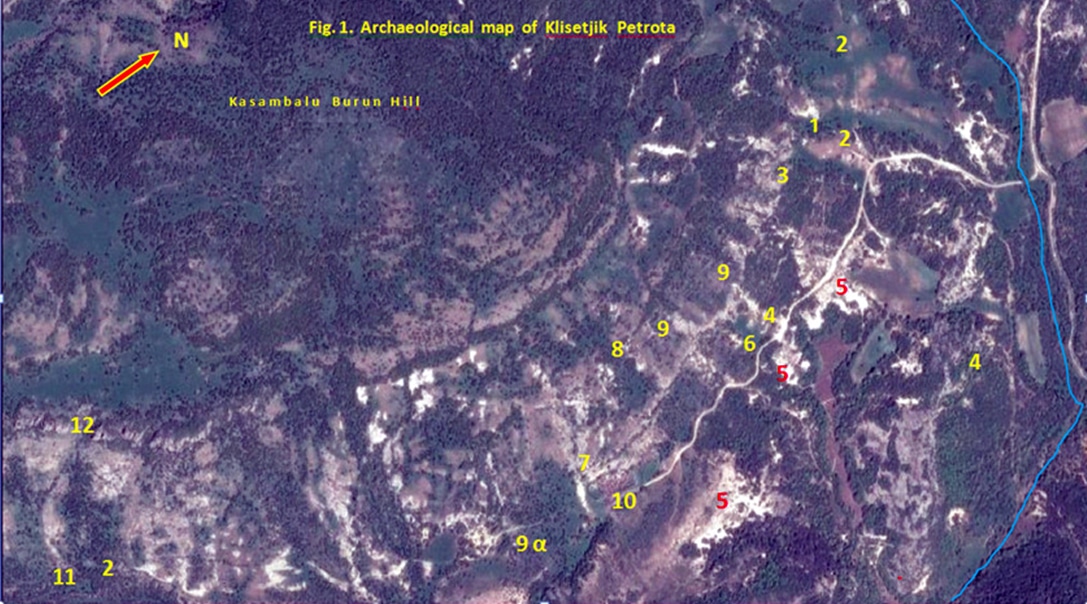
Figure 1. Legend:1. The cave Sanctuary of the Great Mother Goddess in Klisetjik with the anthropomorphic eye sockets (mask), 2. Watering-fountains, 3. Rock with carved anthropomorphic eye sockets (masks), 4. Carved throne, 5. Volcanic lava outcrops with carved burial niches, 6. Sun Sanctuary and observatory, 7. Balanced stones, 8. Rock-cut burial niche, 9. Stone mounds (Cairns burial monuments), 9 a. Plundered grave (cairn), 10. Cavernous carved recesses and monumental Cave-Sanctuary on the smooth slopes of the rocky elevation, 11. Ancient settlement of Petrota, 12. Giant carved figure of the Great Mother Goddess or Cybele.
1.2. Geographical context of the Klisetzik area of Petrota
The Kasambalu Burun hill and its eastern foothills which are crossed by an ancient dirt road (Fig. 1) are the protagonists of what will be mentioned and described in this scientific work. It is a moderately high hill with relatively smooth slopes and pyroclastic rocks. At the foot of the hill to the north and east there are a few smooth areas and springs. Lower down the elevation a stream flows which surrounds the low northern and eastern side of the elevation, fed by the surrounding streams and embryonic currents that often cause sudden floods with their volume of water, creating a swampy area with abundant and rich vegetation to the east.
- 2. The Cave–Sanctuary of the Great Mother-Goddess in the area of Klisetjik of Petrota
Descending the north-eastern dirt road that leads to the area of Klisetjik Petrota[1], we notice at the foot of the hill from a distance of one kilometer an elongated rocky outcrop that dominates the area and is the primary human choice of the space connected to ritual and cult practices (Fig. 2).
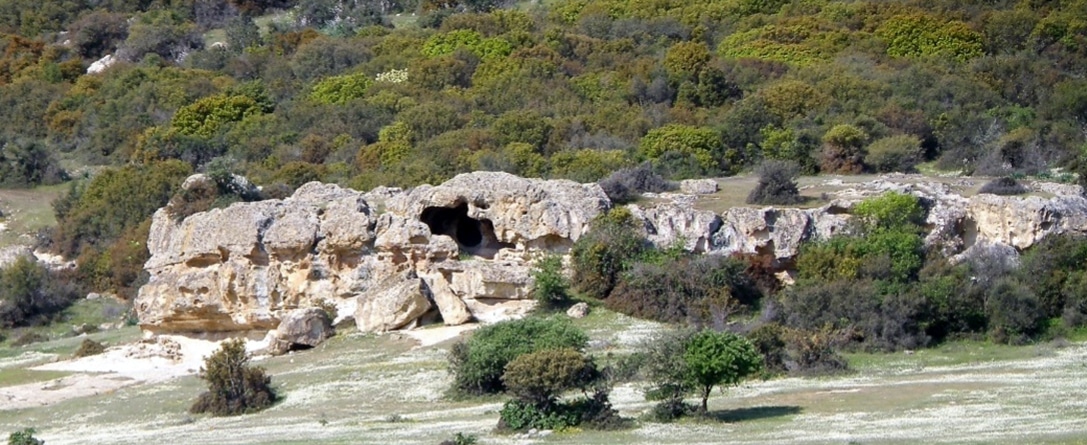
Figure 2. Panoramic view of the Cave-Sanctuary of Mother Goddess (Cybele) in Klisetjik of Petrota. To the left of the rock can be seen the eye sockets that embody the deity and to the right the entrance to the Sanctuary with the shallow cave.
The monument is carved at the site called Klisetzik (Turkish = small church), two kilometers away from the younger village of Petrota.
On the left side of the rocky outcrop eye sockets were carved the anthropomorphic features of the deity (mask), with which the Thracian inhabitants of the area give meaning to the rocky landscape which is decoded as the face of the Great Mother Goddess embodied in the rock, which they believe is her residence (Fig. 2). On the northern side of the rocky outcrop, there is a dirt ramp (road), built on detached rocks, that leads to the entrance of the shallow cave, which consists of a four-sided chamber ± 8.25 sq. m with a carved arched roof (Fig. 3).
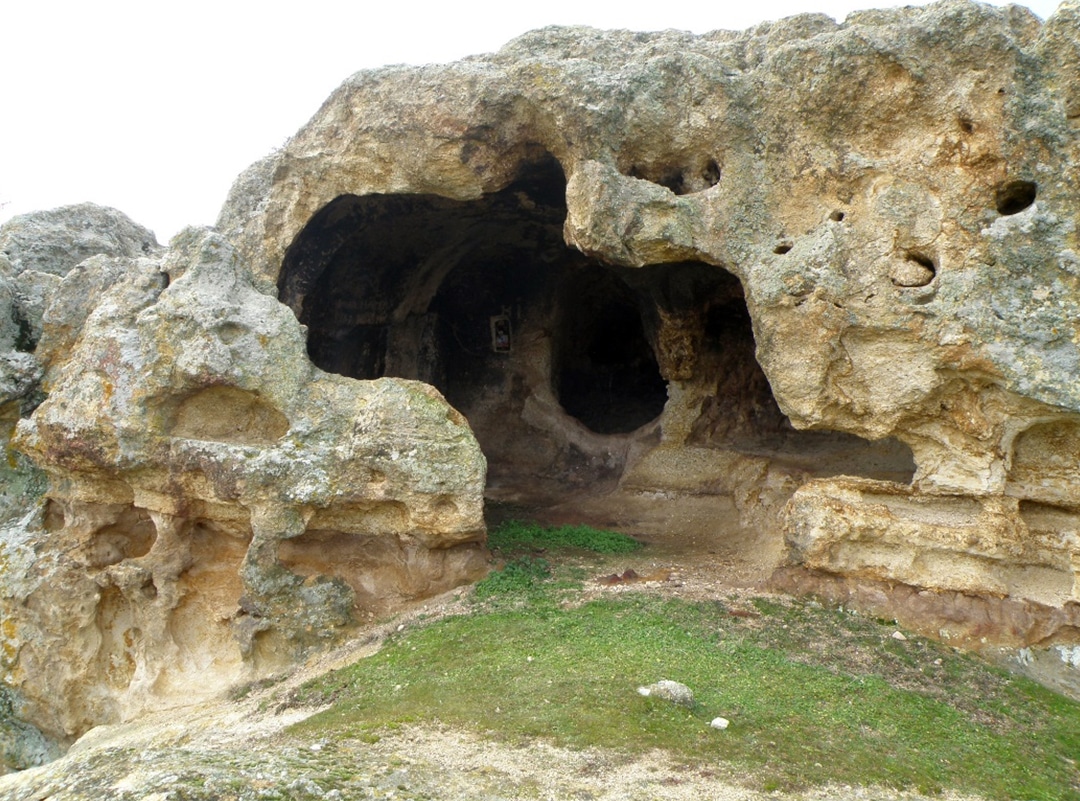
Figure 3. To the left of the entrance of the shallow Cave-Sanctuary, an indistinct outline of a lion and a semicircular niche were carved into the rock, symbols of the Mother Goddess (Cybele) that give it its name. Inside the Cave-Sanctuary the purification basin is visible (Archaeological map Fig.1, position 1).
In the center of the southern side of the natural rock of the chamber, there is a large carved basin, an ancient structure that assisted in water purification rituals (Fig. 3). The entrance to the Cave-Sanctuary is flanked on the left by the faint carving of a lion on the rock, whose shape is indistinct and only its lower limbs, eyes and head are clearly visible. A lion and a carved semicircular arched niche are symbols of the Great Mother Goddess (Cybele) that confirm the deity to whom the Cave-Sanctuary was dedicated (Fig. 3). At the top of the rock, the existing altar is carved with a flow channel. Near the Cave-Sanctuary there are visible house foundations (Fig. 4). The repeated presence of the eaves with the eye sockets on the slopes of the elevation is reminiscent of the iconostasis and shrines of the Greek countryside.
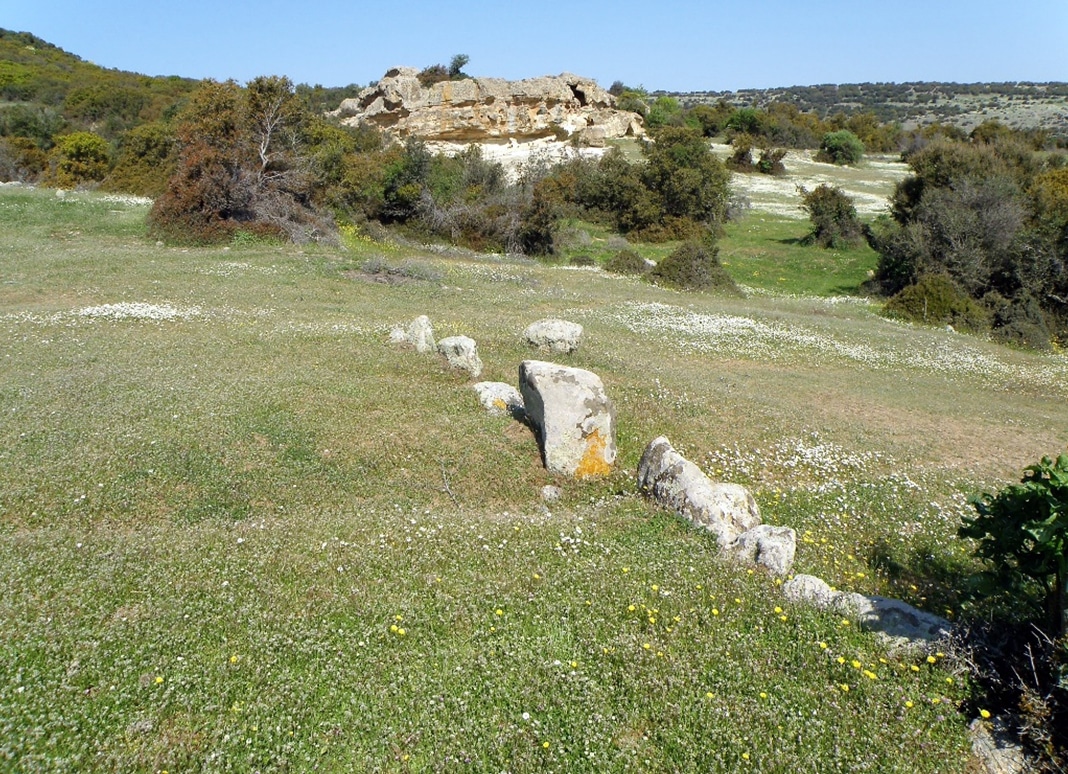
Figure 4 Remaining foundations of a house next to the cave-sanctuary.
- Carved Thrones
Carved thrones[2] are located in the Klisetjik area (Fig. 5, 5a), at the location numbered (4) of the archaeological map of image 1 and images (5). The symbolism of the empty throne has a soteriological dimension and its illumination by sunlight is the true holy marriage, the seventh degree of the cosmogonic cycle which according to Alexander Fol documents Thracian Orphism (Fol,1983, pp. 217-230; Fol, 2007, p. 370; Francovich, 1990, p. 69 fn. 642).
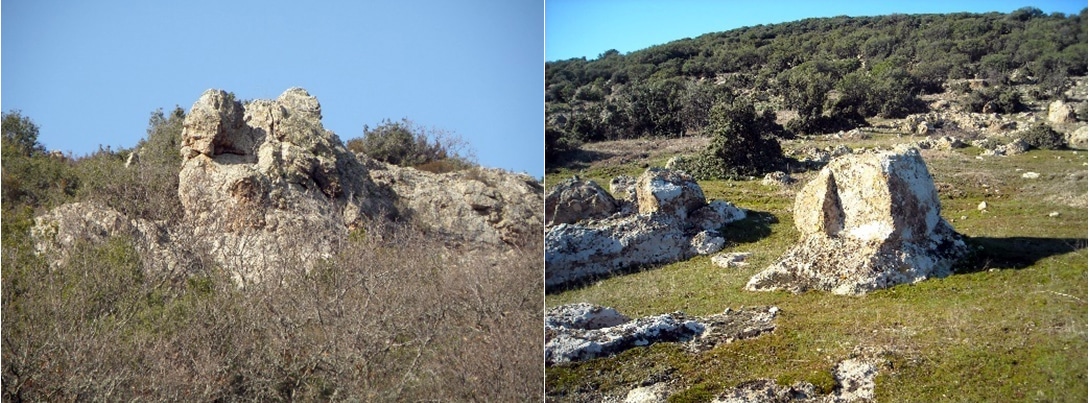
Figure 5-5a. Thrones oriented east (Archaeological map Fig. 1 position 4).
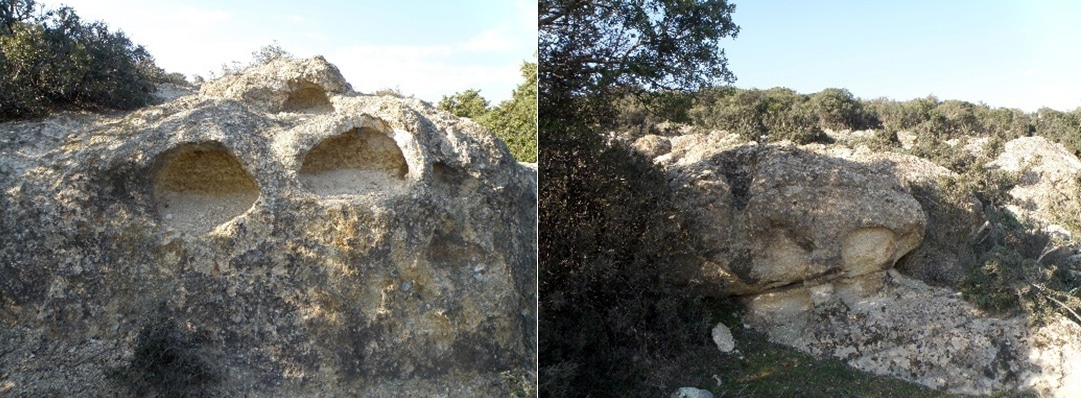
Figure 6-6a. Eye sockets carved into rocky outcrops symbols of the Great Mother Goddess. Some have receptacles for offerings and others altars.
- The first megalithic Sanctuary of the Sun and solar observatory in Greece and its association with the earthly Great Mother Goddess or Cybele
In 2019, with the voluntary support of fellow traveller photographer and independent researcher Alexander Hennig, we located one of the most important prehistoric monuments dating from 2200 B.C. and belonging to the Megalithic Culture of Thrace. It was located at the foot of the eastern slope of the hill named Kasabalu Burun (southwest of Klisetjik)[3]. It is a stone circle with a circumference of ±126 m and a diameter of ±40 m, built around a contiguous rocky outcrop bearing altars, which are the unmistakable signs of a cult rock where rites of passage and cult practices were performed (Fig. 7). The said megalithic structure flanked to the west by funerary monuments and eye sockets, attesting to the worship of the Sun God and Great Mother Goddess, Cybele, has been constructed to observe the course of the Sun. It aligns with solstices (Fig. 8) and equinoxes (Fig. 9), decoding the messages of the communicative
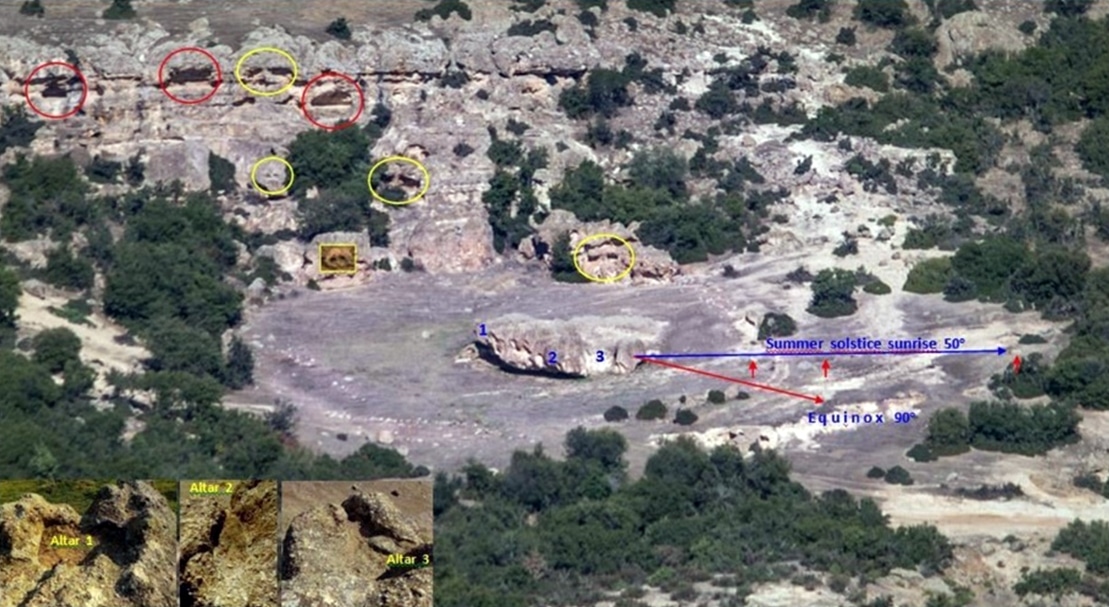
Figure 7. South-eastern view of the solar observatory in the Klisetjik area of Petrota. The stone circle and the rocky outcrop with the altars is flanked to the west by the rock relief, in the body of which were carved eye and burial niches marked with yellow and red circles respectively (Archaeological map Fig. 1, position 6). The numbers 1,2,3 denote altars. The blue arrow aligns with the sunrise of the summer solstice, the red arrow aligns with the rising equinox.
disposition of the chieftain and priest or high priest of the area, responsible for daily worship and regulator of ritual matters, helping rural Thracians to measure time and set the agricultural and ritual calendar (Kiotsekoglou, Maglova, Stoev, 2020, pp. 337-349; Kiotsekoglou, Varvounis, 2020, pp, 454-464).
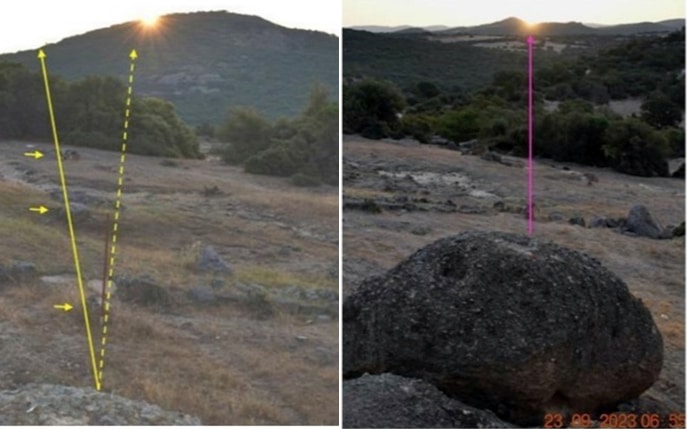
Figure 8. Summer solstice of Klisetjik Petrota 50o (yellow axis) as visually aligned with the three rocks and depicted before the sun appears on the horizon. The sunrise on 21-06-2023 takes place a t 05:46 based on astronomical forecasts.[4] The axis with dotted lines show the sunrise, as soon as the sun crosses the geomorphological relief of the ridge of the hill, five minutes after its sunrise on 06-21-2023. In the case of the solar observatory of Klisetjik Petrota, the geomorphological relief prevents the photographic depiction of the sunrise at 50°. Figure 9. Depiction of the sunrise during the equinox of 09-23-2023 at 90° and its visual alignment with the oval rock of the solar sanctuary.
- Cave–Sanctuary of the Great Mother Goddess
About three hundred meters south of the solar observatory, on the eastern side of the Kasambalu Burun rocky hill, cave recesses are carved in an area that is currently used as a sheepfold[5] (Fig. 11). Between the solar observatory and the Cave-Sanctuary identified superficially a leaf-shaped stone point of the Middle Palaeolithic (Fotiadis, 2016, pp. 1-11).
Inside the Cave-Sanctuary you can see carved eye sockets, possibly the central ritual space of the sanctuary of the Earth Mother Goddess. On an outcrop that dominates the cave and cavernous recesses, embedded in the massive rock is the protruding whole carved head of the Earth Mother Goddess (Fig. 12), a fact confirmed by the remaining circuitous engraving of the right ear, which was apparently rendered with an inlaid copper blade. Facial features are damaged or eroded by the passage of time.
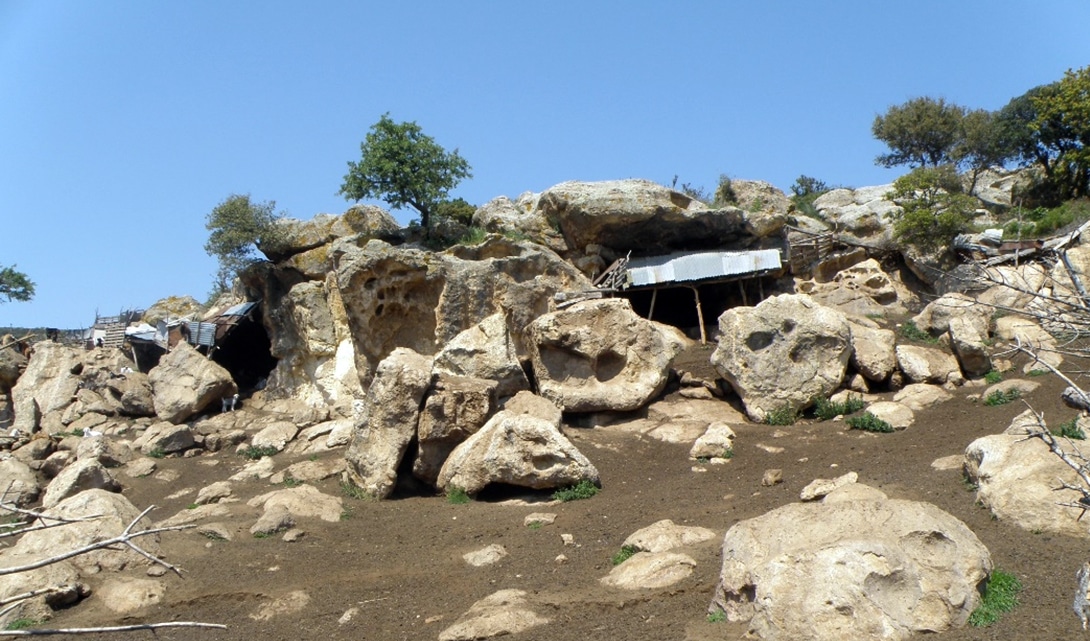
Figure 11. Cavernous recesses of Sanctuary that are now used as sheepfold.
On the slopes of the Kasambalu Burun hill, the rocky outcrops and every trace of human cult activity that responds to the will of the Thracian priest to stage a cult ritual and convey a specific message to us, were investigated. Sometimes traces of an epiphany by, placing a boulder in balance on another rock (Fig. 13), at other times forming stone mushrooms by placing a stone pillar on a stone shaft (Fig. 14; 14a), emphasizing the ecstatic and orgiastic character of the worship or symbolizing Dionysus Savage. Sometimes by carving eye sockets in the rocks turning the rock into a theophany (Fig. 6, 6a), or by carving altars with an outflow channel in the rocks (Fig. 15), an indisputable symbol of the sanctity of the site.
The depictions do not lack the horned serpent (Fig.16; 16a) as well as other representations of reptiles, obviously necessary elements for the chthonic rites to the Great Mother Goddess that confirm the sanctity of the site and give the cult an orgiastic, fertile and chthonic dimension, as the surface messages that were conceptually decoded convey to us (Kiotsekoglou, 2024, pp. 258-268).
Most impressive of all the above, which leaves room for associations and the possible arrival of Cretans or Mycenaeans in Thrace, is the labrys (ax) carved in natural rock (Fig. 17). Researchers of the Minoan Civilization consider the labrys (ax) an incarnation of the deity itself. It depicts the sacred union of the Heavenly God and the Earthly Goddess, a symbol of hierogamy. It was also found in Bulgaria in dolmens of the Strandzha mountain range, Sakar Mountain and Aino (European Turkey) (Dinchev, 2016, pp. 265-266).
- The staging of the burial ritual and the ideological background in the ritual landscape of the Klisetjik Petrota area
At the rocky foothills of the hill, below the dirt road in figure (1), at the positions (5) of the archaeological map, the rock consists of binding material consisting of clay, with xenoliths which, during disintegration, are detached and leave a void.[6] These are volcanic lava outcrops bearing naturally formed cavities, which human ingenuity fashioned into carved burial niches and offering pits, a way in which the Thracians manifested their religiosity and metaphysical beliefs.
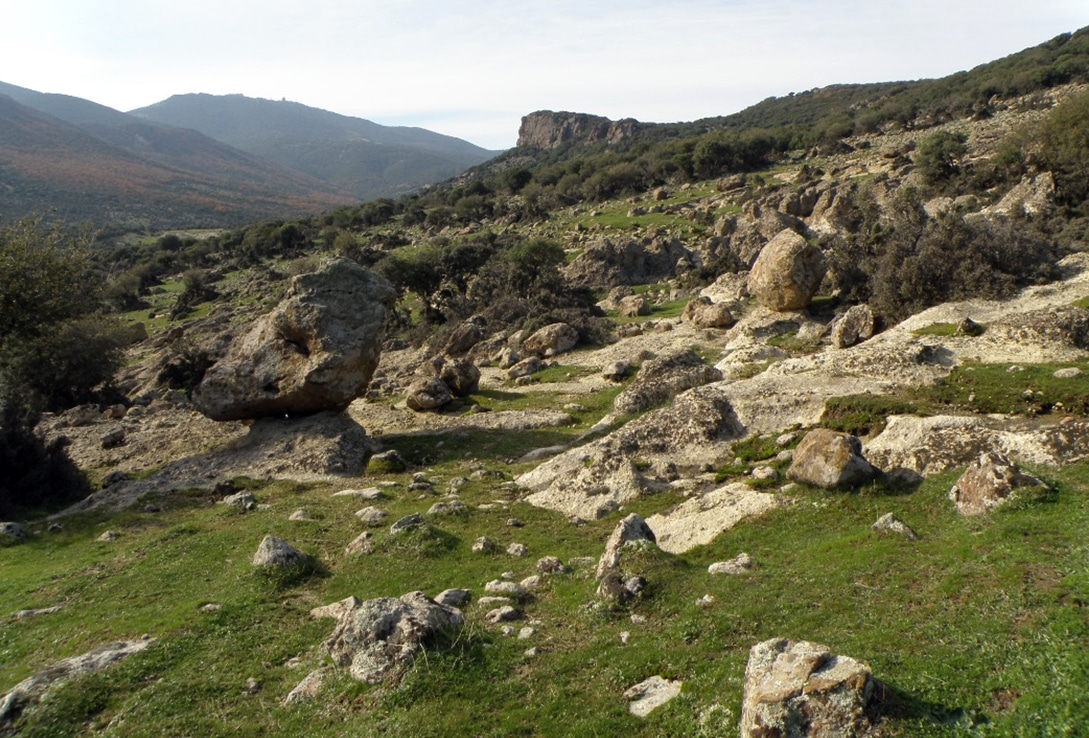
Fig. 13. Balanced rocks higher up the sanctuary cave – sheepfold of Great Mother Goddess.

Figures. 14, 14.a. Stone mushrooms, contexts of the cave sanctuary of the Great Mother Goddess.
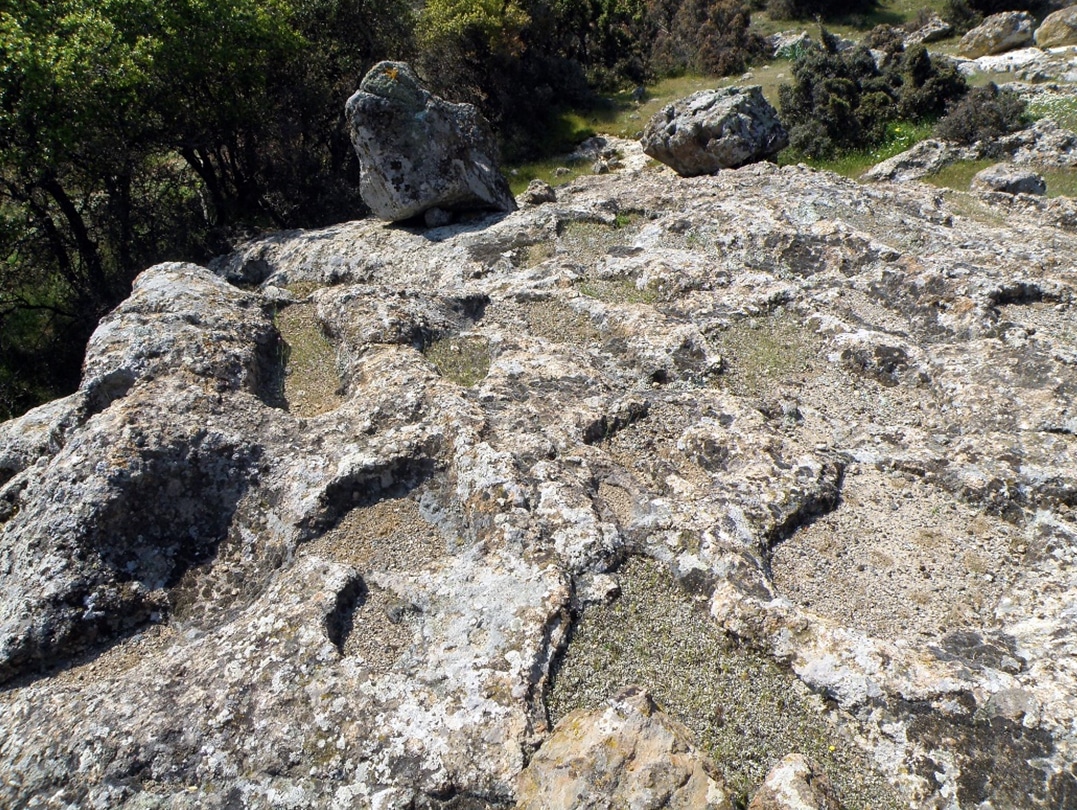
Figure 15. Altars for blood sacrifices on outcrop above the cave-sheepfold, sanctuary of the Great Mother Goddess with contextual balanced rock snakes and labry (ax).
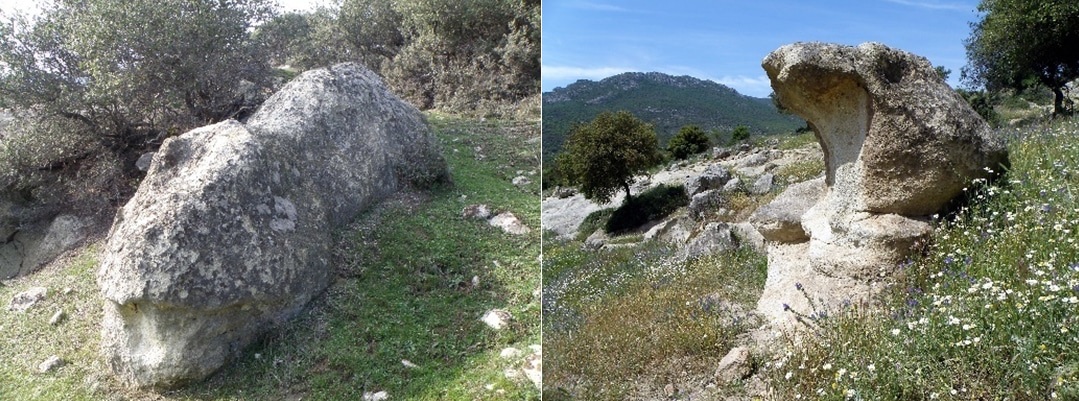
Figures 16, 16a. Carved rocks in the shapes of snakes with open mouth.
Man in many cases uses and shapes pre-existing geological features by further carving, which provide him with the possibility to give meaning to his cult or burial environment.
These are burial niches of disembodiment, which usually bear on top the well-known anthropomorphic mask or eye sockets that signify the presence of the earthly Mother Goddess who is decoded as the patron deity of the deceased (Fig. 20, 21), clearly confirming and with illustration, that the dead of the grave with the predetermined destination “to dwell with the divinity” = « μετά θεῶν οἰκήσει», was: κεκαθαρμένος (= one who has undergone purification), τετελεσμένος (= one who has been initiated into the rites), that is to say: he was Bacchus, as Plato mentions about the relationship of the soul with the divine in Phaedon dialogue 69c: «… ὁ δὲ κεκαθαρμὲνος τε καὶ τετελεσμὲνος ἐκεῖσε ἀφικόμενος μετά θεῶν οἰκήσει =…but the pure and initiated into the rites, as soon as he arrives there, he will dwell with the gods». This diffusion-spreading of ideas which are transubstantiated in Phaedo and spread to all parts of the known world at the time, the Thracians reverently depict by predetermining the fate of their beloved dead to cohabit with the divinity. In my opinion, the burial niches in the Thracian land, consecrated by the incarnation of the deity in the rock, are dated, based on a terminus post quem that begins in the second half of the 4th c. BC, several years after the writing of Phaedo, Crito and the Apology of Socrates, i.e. the “trilogy of death”, as well as after Plato’s death in 347 BC (Kiotsekoglou, 2024, pp. 273-288).
On the slope of the Kasambalu Burun elevation, a rocky outcrop is found that was carved into a monumental rock-cut grave (Fig. 18, Archaeological map figure 1, position 8) and was bordered around with stone material. The semi-circular entrance to the niche grave is oriented to the east and was apparently closed, as can be seen from the existing scattered stone material around the entrance. Burial niches can also be seen in the rocky relief that flanks the solar observatory to the west (Fig. 7).
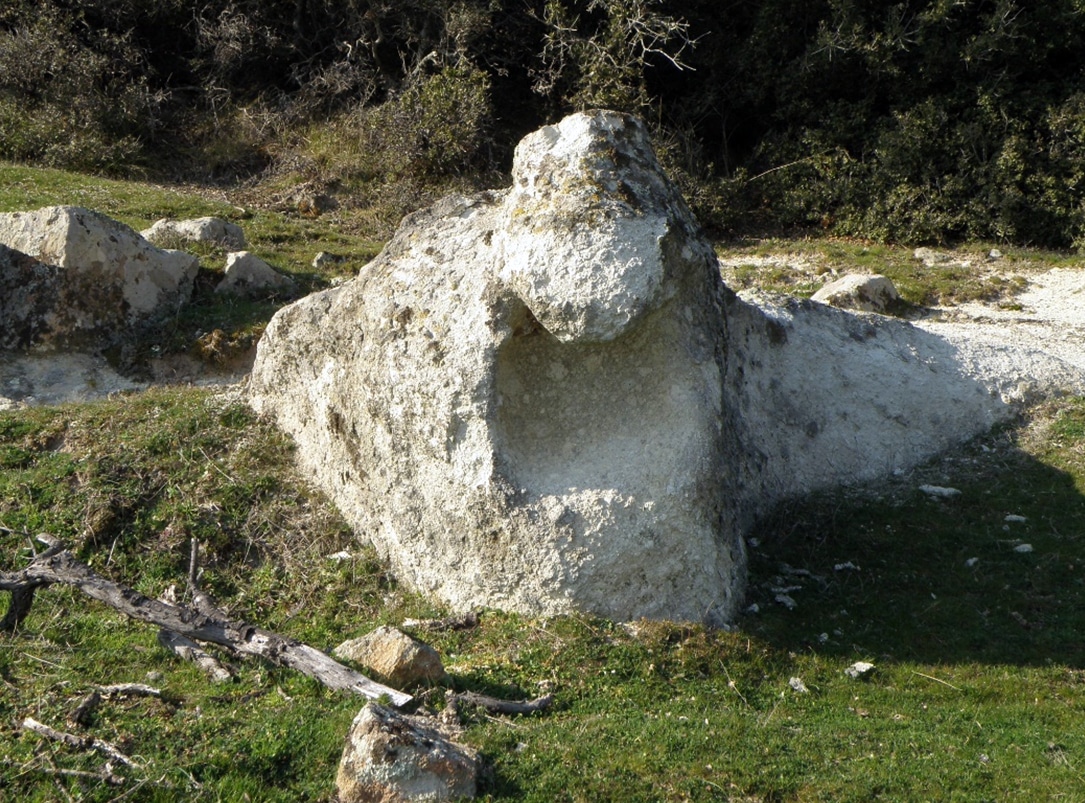
Figure 17. Labrys carved in natural rock.
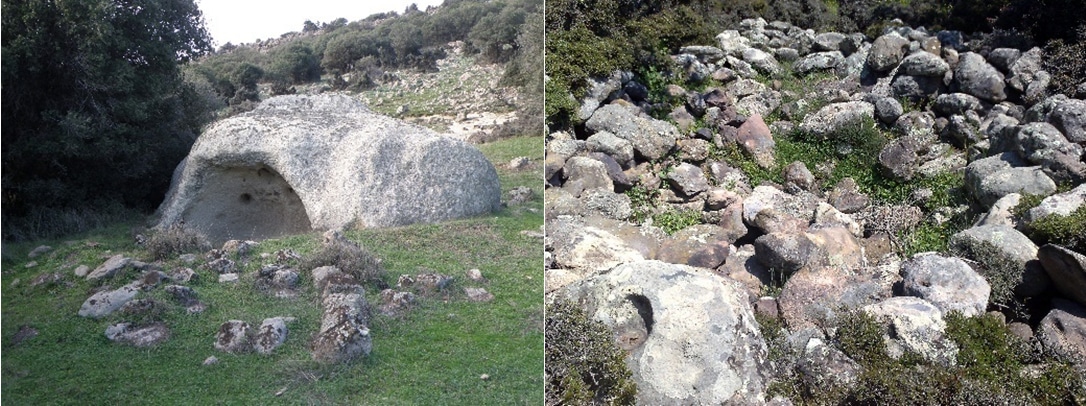
Figure 18. Monumental rock-cut grave. Figure 19. Plundered grave (cairn).
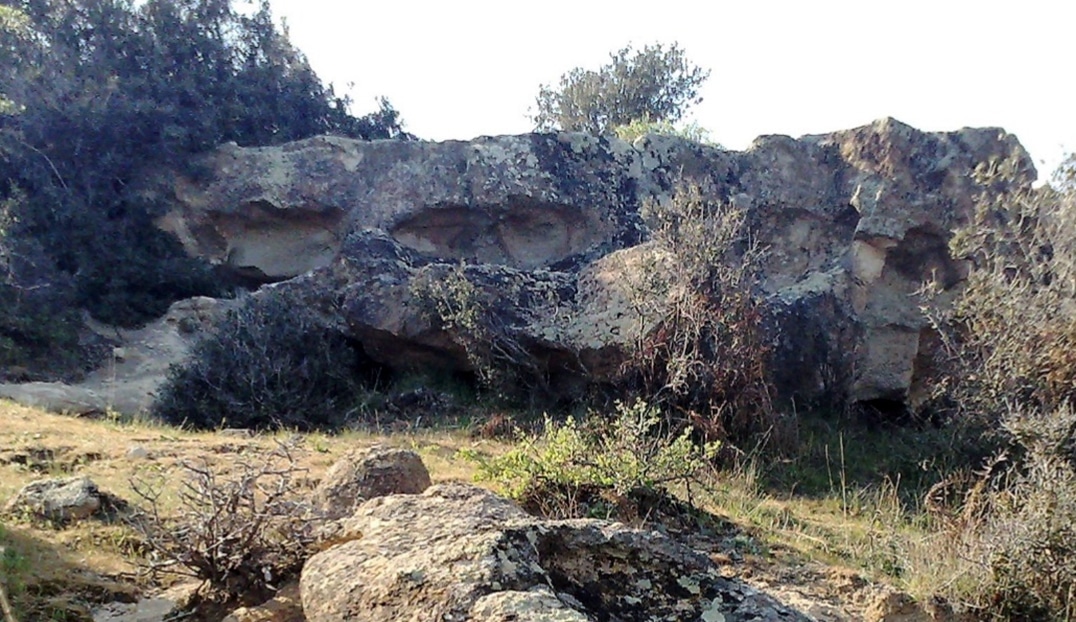
Figure 20. Niche tomb at the rocky foot of the hill (Archaeological map Fig. 1, position 5 in the center). Above, the embodiment of the deity with the carving of the eye sockets in the rock symbolically placing under her protection the deceased who is placed in socket below the eye sockets.
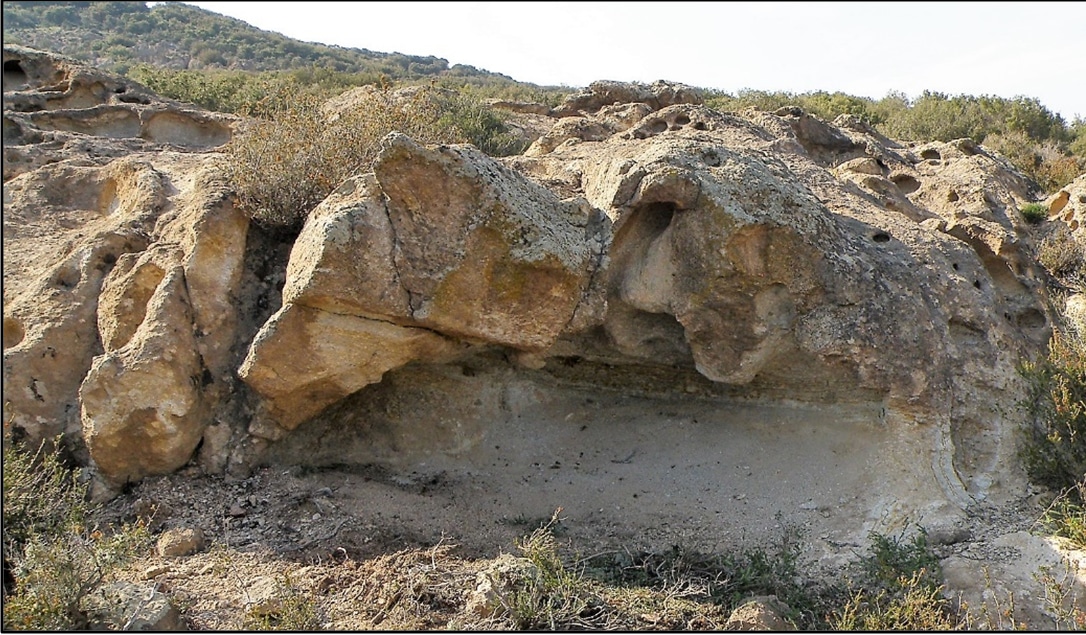
Figure 21. Niche tomb at the rocky foot of the hill (Archaeological map Fig. 1, position5in the center). Above, the embodiment of the deity with the carving of the eye sockets in the rock symbolically placing under her protection the deceased who is placed in socket below the eye sockets.
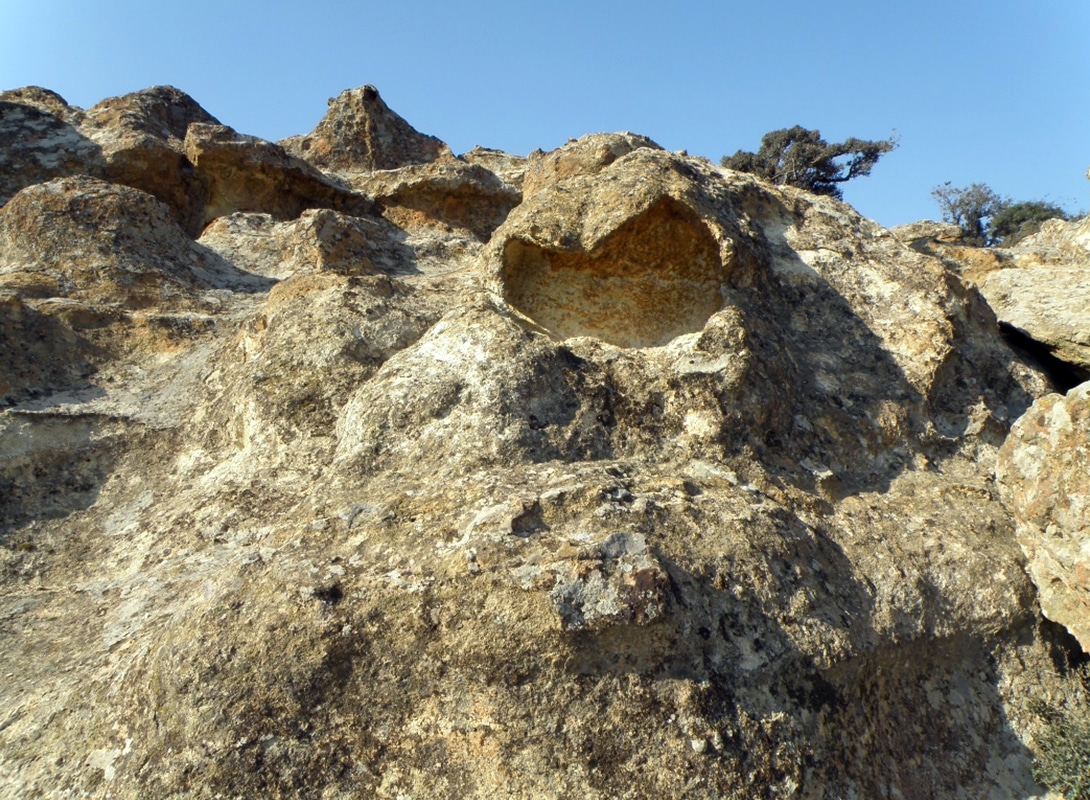
Figure 22. Burial niches of secondary bone deposition.
Another type of burial monuments is found on the eastern and southern slopes of the hill (Fig. 19)[7]. These are accumulated stones or cairns that were probably secondary deposits of the unarticulated skeletal remains that came from the burial niches carved into the rock (Fig. 18). Small burial niches of secondary deposition of the deceased, like ossuaries, can also be found (Fig. 22).
- The ancient village of Petrota under the protection of the Great Mother Goddess on the Karmi Kaya hill
After the sheepfold and the Cave-Sanctuary and at a distance of about a thousand meters in a westerly direction we come across the southern steep slopes of the Kasambalu Burun hill, which bear the name Karmi Kaya (=Rock of Destiny), as a resident of the village of Askites informed me. The high vertical rocky outcrops of Rhyolite (=volcanic rock analogous to granite), were carved, depicting the well-known mask on the rock (Fig. 23) with the anthropomorphic features that give meaning and sanctify the rock, which acquires sanctity as it is transformed into the abode of the deity.[8] Below the monumental depiction of the Great Mother Goddess, there are obvious ruins with unstructured stone blocks (Fig. 24). The spring-watering hole (Fig. 24) is fed by the surrounding streams flowing from the steep ends of Karmi Kaya. It supplied water to the now-ruined facility, confirming the report of the Muslim owner and veterinarian of the sheepfold, Murat, as well as that of his shepherd, who told me the stories of their grandfathers: “…how it is about the ancient village of Petrota, whose inhabitants in the last century moved and settled in the present village of Petrota…“, next to the hill referred to as the citadel of Petrota.
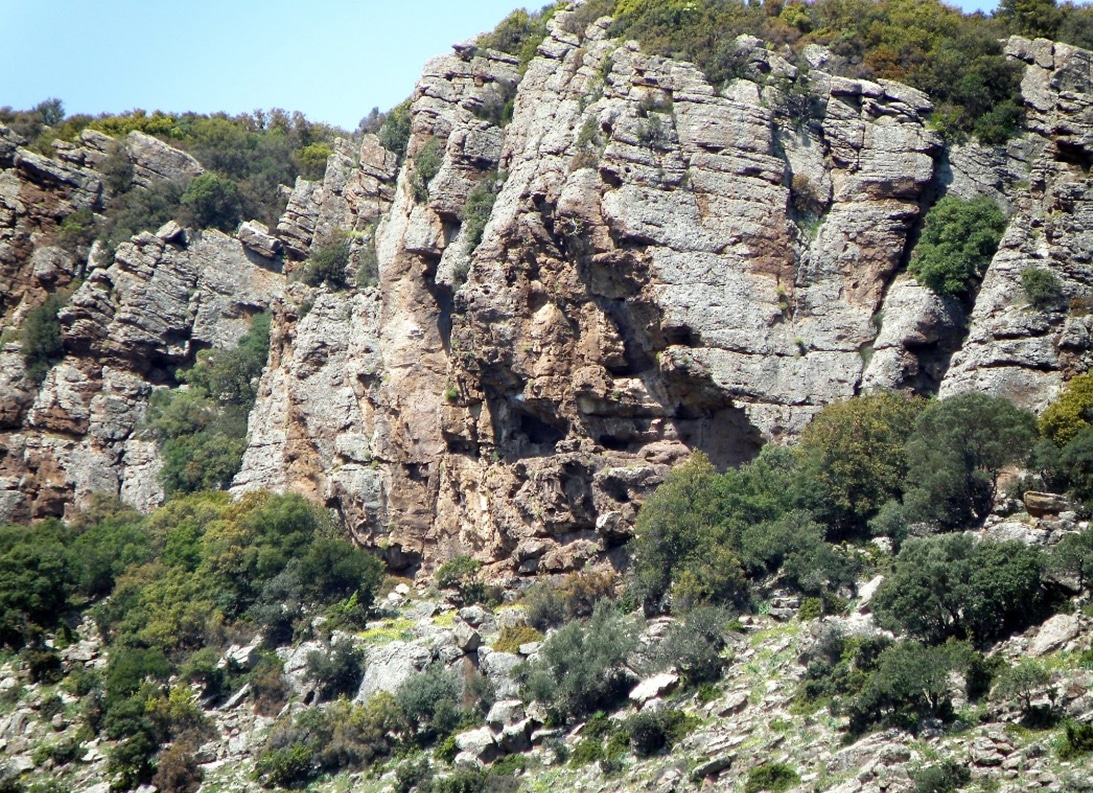
Figure 23. The depiction of the Great Mother Goddess or Cybele on the south side of the hill called Karmi Kaya. The carved form dominates the ancient village of Petrota Rodopi which is under her protective gaze.[9]
Conclusion
The natural landscape at the Klisetjik site, was memorialized by the presence of human intervention that modified the area with the construction of necropolises, sanctuaries, monuments intended for collective worship. In this regard, natural places of worship, whether natural, monumental or built, are seen by communities as a grand stage. Like scenography in theatrical productions, the landscape is an integral part of the ceremony and helps clarify its meaning. Religious or funerary rites can be seen as a “stage”, an almost theatrical representation of feelings of worship towards the deity or mourning for the deceased and his dependence on the deity.
Acknowledgements: I thank the archaeo-astronomer professors Alexey Stoev and Penka Maglova for their positive energy and disposition to visit the Klisetjik area (Petrota). With their measurements and knowledge, they confirmed the existence of the first solar observatory and sun sanctuary in Greece and Greek Thrace.
References
- Catacchio, N., (2012). Paesaggi cerimoniali. La messa in scena dell’ideologia relogiosa e funeraria.Preistoria e protostoria in Etruria, Atti del Undicesimo Incontro di Studi, Valentano (VT)-Pitigliano (GR), 14-16 Settembre 2012: Paesaggi cerimoniali: ricerche e scavi, 13-24
- Dinchev, Y., (2016). Front Plates and Openings of Thracian Dolmens: Typology and Analysis, In. D. Spasova (ed.) Second International Symposium Megalithic Monuments and Cult Practices Blagoevgrad, 12-15 October 2016, 259-267.
- Fol, Α. (1983). Interpraetatio Thraciaca, Journal of Indo-European Studies, Vol. 11, Numb. 3 & 4, 217-230.
- Fol, V., (2007). Rock Topoi of Faith in the Eastern Mediterranean and Asia Minor During the Antiquity, Studia Thracica. Vol. 10, 347-377.
- Fotiadis, M. (2016). Leaf-Points from Petrota (Greek Thrace) and the Palaeolithic Chronology of the Vrachos Chert Quarry, British School at Athens, 1-11.
- Francovich, G. (1990). Santuari e Tombe Rupestridell’Antica Frigia. Rome: Ed. L’Erma,
- Kiotsekoglou, S., Maglova P., Stoev A. (2020). Prehistoric Solar Observatory from the Ancient Settlement of Petrota, Hellenic Republic. In: Spasova, D., Genov, A. (eds.). Megalithic Monuments and Cult Practices. Proceedings of the Third International Symposium, Blagoevgrad, 8-9 September 2020. Neofit Rislki University Press. pp.337-349.
- Kiotsekoglou, S., Varvounis M. (2020).Sun Worship, Fire Worship, and Fertility Ceremonies in Thrace. Spasova, D., Genov, A. (eds.). Megalithic Monuments and Cult Practices. Proceedings of the Third International Symposium, Blagoevgrad, 8-9 September 2020. Neofit Rislki University Press. pp. 454-464.
- Kiotsékoglou, S., (2024). Τελετουργικά τοπία της αρχαίας Θράκης. Τhessaloniki: εκδ. Αφοί Γεωργιάδη.
- Melás, E., (2003). Αρχαιολογία σήμερα. εκδ. Καρδαμίτσα.
- Preucel, R., Meskell L., (2007). A Companion to Social Archaeology, Blackwell Publishing Ltd.
SOURCE-ΠΗΓΗ: Archive of Culture – ΑΡΧΕΙΟΝ ΠΟΛΙΤΙΣΜΟΥ, 20.10.2025.
Notes – ΣΗΜΕΙΩΣΕΙΣ:
[1] Archaeological map figure 1 position 1, Coordinates 40.91205 25.597884
[2] Archaeological map Figure 1, position 4
[3] Archaeological map figure 1, position 6. Solar observatory coordinates: 40.908618 25.596649.
[4] https://el.meteotrend.com/sunrise-sunset /gr/ komotini/ (21-06-2023).
[5] Archaeological map figure 1, position 10, Coordinates: 40.906339 25.593866
[6] Archaeological map figure 1, positions 5
[7]Archaeological map figure 1, position 9, 9a
[8]Archaeological map figure 1, position 12
[9] Archaeological map Fig. 1 position 12
λατρευτικα σπηλαια θρακης ροδοπης λατρευτικο σπηλαιο αρχαια θρακη ροδοπη μεγαλη μητερα θεα κυβελη, χειροπελεκυς λαβρυς κιοτσεκογλου Thrones, Balanced Rocks, Rock Cut Graves, Cairn Graves, Stone Mushrooms, Serpentine Rock Formations, Labrys Ax, Repeated Carved Eye Sockets αρχαιος Θρονος, αρχαιοι Ισορροπημενοι Βραχοι, Ταφοι Λαξευτοι βραχος, Ταφος σωρος, Πετρινα Μανιταρια, Σχηματισμος Σχηματισμοι Ελικοειδεις ελικας ελιξ μεγαλιθικα Βραχια Τσεκουρι Λαξευμενη Κοιλοτητα Οφθαλμοι ματια Λαξευτος Ταφικα εθιμα πετρινο μανιταρι, βραχοσχηματισμοι Ελικοειδης Λαξευμα οφθαλμος ματι βραχοσχηματισμος Cave Sanctuaries Great Mother Goddess Kyveli solar observatory θεος ηλιος ναος ηλιου Sun κασαμπαλου καζαμπαλου μπουρουν Kasambalu Burun rocky hill κλισετζικ Klisetjik Petrota πετρωτα